What do you actually SAY in evangelism?
***Below is the next part in a series of posts I'm making about Evangelism, but if you're seeing this post on Saturday, Jan 24, then you know we're snowed in! I said we'd make the final decision about cancelling church at sundown on Saturday, but the writing is on the walls that we're obviously going to have to cancel our church service on Sunday. Anyway, back to our regularly scheduled programming***
 |
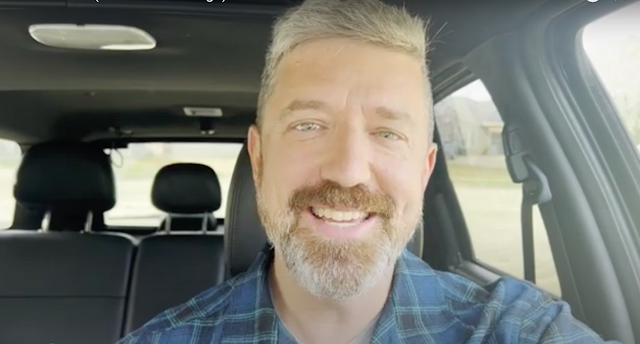
| Real-life Evangelism in action (click to see the video) |
One of the many difficulties people have with going out and doing random street evangelism is that people often struggle to know what to say. How do you start a random conversation about Jesus, and what do you do AFTER you start the conversation?
This post will cover what I call The Approach (how to start a conversation) and The Drive (how to get to your destination). Over the last 16 years, I've gone out and started thousands of random evangelism conversations, and I've figured out a few things that work well for me. None of this is gimmicks. It's all ways I've learned to generate real conversations.
First of all, I pretty much always start with a destination in mind: sharing the Gospel accompanied with a demonstration of power. A demonstration of power means praying for some kind of sign to confirm the Gospel that I preach. With the destination of sharing the Gospel marked on the map, we need to know how to get there.
The Approach (how to start a conversation)
When I walk up to a person or even a group of people, I pretty much always start with two questions back to back:
"Can I ask you a question really quick?" This question is simple enough. Usually, people say something like, "Sure" or "what kind of question?" I take that as good enough, and I launch into the real question. It pretty much always sounds like this, "I'm a Christian and I'm here looking for someone who feels like something is missing from life, and they're trying to figure out what it is. Is that you?"
This simple question does a few things. First, it lets them know that this is a Christian thing. I like to give people a clear category to put the interaction into in their minds. Second, it gives them a straightforward question where they won't feel uncomfortable saying, "no." Sometimes, people take advantage of the moment and say, "yes!" Those always turn out to be good conversations.
Typically if a person says, "no" I will say something like, "That's great. I'm glad nothing is missing from your life. What are you doing right?" This tends to lighten people up, and it gives them a chance to preach to me for a second. I find that many people are actually open to talking, and asking them for life advice right out of the gate, is a great way to get a conversation going.
This opening question is a great place to leave the door open for a low-risk Demonstration of Power: a word of knowledge. Every once in a while, when I approach a person, I'll have a feeling that I know something that is going on with them: they're suffering from migraines, they are tormented by nightmares, they have a mysterious pain in their lower back, etc. In my approach question I'll say "I'm a Christian, and I'm looking for someone who is having migraines (or whatever I'm sensing). Is that you?"
I say this is a low-risk type of demonstration because if you're wrong, the person doesn't even know you're taking a stab at a prophetic word of knowledge, so you can pretty much just move on to the next question. Truth be told, I don't do this very often, but I'm sure some other people in the church, who are more prophetically gifted, could make a lot of use of this.
______
The Drive (how to get to you destination)
At the risk of making this post a little TOO long, I'll go ahead an include how I get to my destination. In the numerous gospel conversations I've been in, I've pretty much discovered that the following three questions can always come up when I'm stumped, and they tend to be able to naturally move the conversation toward the Gospel. Here they are in the order they usually come up:
"Do you consider yourself a religious or spiritual person?"
In MANY conversations, I'll ask this right after the first question. Sometimes people say "religious." Sometimes they say "spiritual," and sometimes they just say, "no." Either way, I ask them to tell me what they believe about life, the world, God, etc, and I ask how they came to their conclusions. People often say things I disagree with. It's perfectly fine to push back on their beliefs, but I don't usually do it at this moment because, I'm heading some place intentional.
"Have you ever had something happen that you would call a spiritual experience?"
I've found that you can pretty much ask this to anyone regardless of how they answer the question about spirituality. If they say, "no," sometimes I'll ask if they know anyone who has. Sometimes I'll give examples like the many times I've woken up feeling like something dark and evil was in the room, pinning me to the bed. I find that if I share about my own spiritual experiences, it sometimes shows people that it's okay for them to admit to theirs.
"Have you ever heard what Christians call 'The Good News'?"
This one is such a golden question because it does so many things. It's a litmus test for the many people who say they are Christians but don't know the most basic Christian beliefs. Actually, here's a bonus question that I sometimes ask when a person tells me they are a Christian but they can't remember the name of the church they go to. I sometimes replace the question above with, "If I wanted to become a Christian, what would you tell me to do?" The question about the Good News, however, is the most versatile because you can ask it to anyone. People will either know the Good News or not.
If they don't know it, I'll simply ask, "Do you mind if I share with you what the Bible calls 'The Good News'?" If I've done my job of asking questions, listening to them, and making it clear that I care about what they're saying, then once I ask this final question, they pretty much always let me briefly explain the Good News.
If they don't know it, I'll simply ask, "Do you mind if I share with you what the Bible calls 'The Good News'?" If I've done my job of asking questions, listening to them, and making it clear that I care about what they're saying, then once I ask this final question, they pretty much always let me briefly explain the Good News.
Just so you know, after I tell them the Good News, I ALWAYS land the plane by simply asking, "Have you heard that before?" "What do you think of it?" and "How much of that do you actually believe is true?"
Hopefully this is helpful. Get out there and give it a shot!
Here's a link to a video where you can see the whole sequence. It's the same video that is linked in teh picture at the top of this article: Akash Hears the Gospel


Comments
Post a Comment